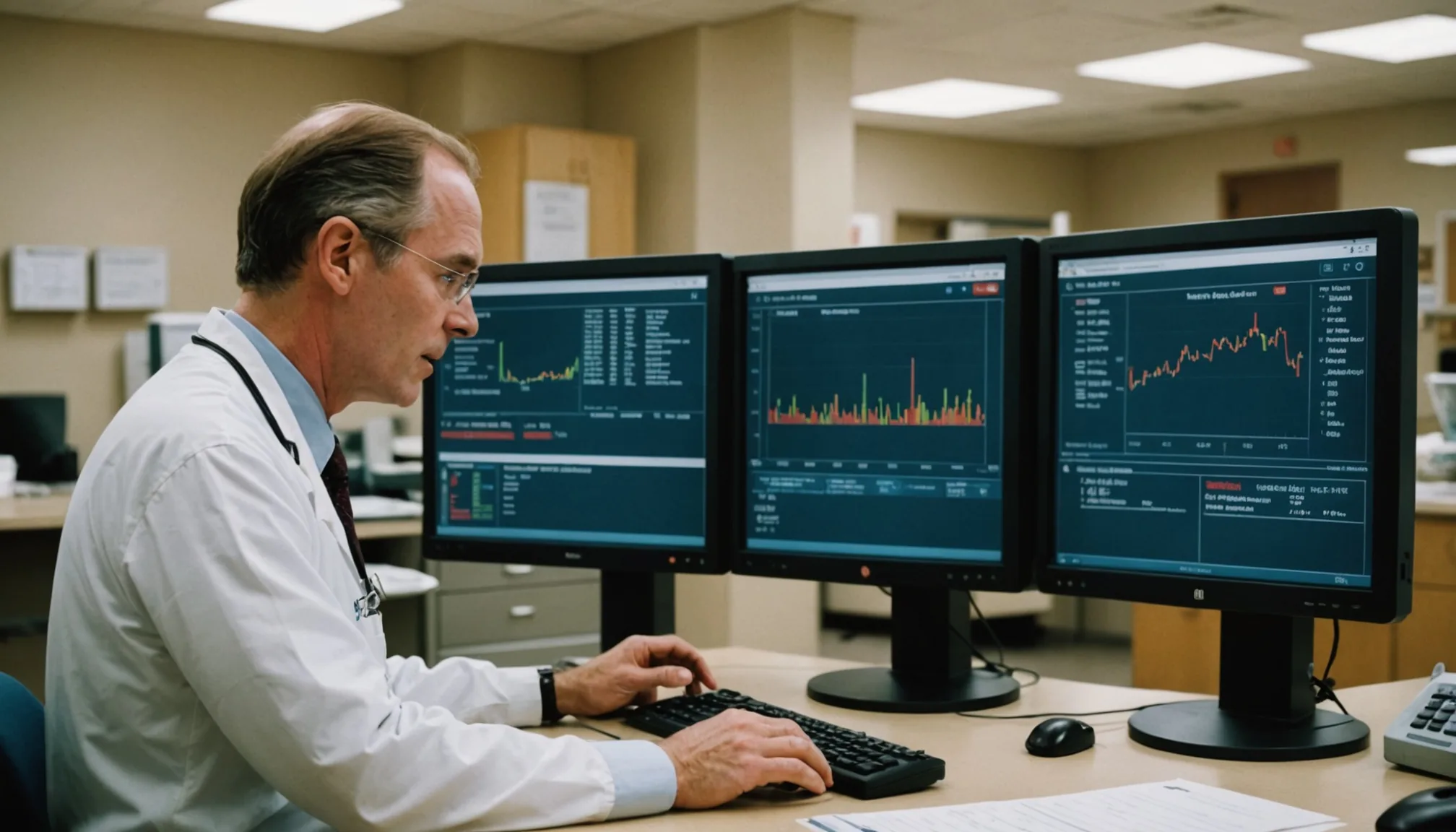


Teletracking has been the dominant bed-management platform at regional and community hospitals for more than two decades. Many hospitals that are evaluating AI-based patient flow tools already have Teletracking deployed for environmental services turnaround tracking, bed-board management, and transport coordination. The question these hospitals face is not whether to replace Teletracking — it is whether a prediction layer can work alongside it without creating a duplicate-data problem.
The answer depends on how the integration is configured. Teletracking and AI-based patient flow tools can operate in complementary roles when the integration is designed with a clear division of function and a two-way data sync that eliminates manual re-entry.
Teletracking’s core strength is real-time bed-board visibility and environmental services workflow management. The platform tracks room-clean status, transport request fulfillment, and bed-board updates in a purpose-built operational interface that most Environmental Services and bed management teams are already trained on. Its turnaround timing data — how long each room type takes to clean by unit and shift — is one of the most operationally valuable data sources in a regional hospital, and it is data that most EHR systems do not collect.
What Teletracking was not designed to do is predict. It shows where things are right now. It does not forecast where they will be in two hours based on discharge-readiness signals in Epic’s care-management module, OR case completions expected from Epic Surgical Services, and historical arrival patterns calibrated to the specific unit and day-of-week. That predictive layer is where AI-based patient flow tools add something Teletracking cannot provide on its own.
The most common failure mode when hospitals run Teletracking alongside a new bed-management tool is duplicate data entry. Charge nurses accept a bed-assignment recommendation in the new tool, then manually update the Teletracking bed board to match. This takes 3 to 5 minutes per assignment. Within four to six weeks, most charge nurses stop using the new tool and revert to the Teletracking workflow they already know. The pilot cites “workflow fit” as the reason the tool did not stick — but the actual reason is that the tool added a step rather than replacing one.
A two-way sync between the prediction layer and Teletracking eliminates this problem. When a bed-assignment recommendation is accepted in the prediction dashboard, the Teletracking bed board updates automatically via the certified HL7 v2 interface. Environmental Services sees the room assignment in Teletracking and begins the room-clean workflow. The charge nurse does not touch Teletracking at all. The room-clean status that comes back from Teletracking feeds into the prediction model’s estimated-time-to-clean calculation for subsequent assignments.
Teletracking supports bidirectional integration through its HL7 v2 ADT interface. The interface uses a certified message format that Teletracking maintains with its integration partners. For regional hospitals running the current Teletracking version, the integration requires configuring the Teletracking interface engine to accept bed-assignment writes from the prediction platform and to push room-clean status updates back. The sync cycle in production implementations typically runs on a 30-second update interval.
Health IT teams should confirm which Teletracking version is installed before scoping the integration. Older Teletracking versions running on the on-premises hardware that many regional hospitals deployed in the early 2010s have a more limited interface engine. Cloud-hosted Teletracking installations, which became the standard after Teletracking’s 2020 infrastructure update, support the full two-way interface without additional configuration.
Three items come up consistently in Teletracking integration projects at regional hospitals. First, the Teletracking integration requires a separate scope of work from the Epic or Cerner FHIR integration. The two integrations run in parallel, but they have different technical contacts, different testing environments, and different go-live checklists. Treating them as a single integration project creates scheduling problems when one side is delayed.
Second, Environmental Services leadership needs to be included in the integration design review. The room-clean workflow in Teletracking is their workflow. If the integration changes how assignments arrive in their queue or modifies the sequence of room-clean requests, they need to understand the change before go-live, not after.
Third, the bed-board state in Teletracking and the bed-assignment state in Epic’s ADT can diverge during network interruptions or interface engine outages. The integration design needs a defined fallback for these periods — typically a rule that Teletracking is the system of record for room-clean status and Epic is the system of record for patient assignment, with the sync reconciling differences on reconnection. Making this decision explicitly before go-live prevents a category of operational confusion that is hard to diagnose once it occurs in production.