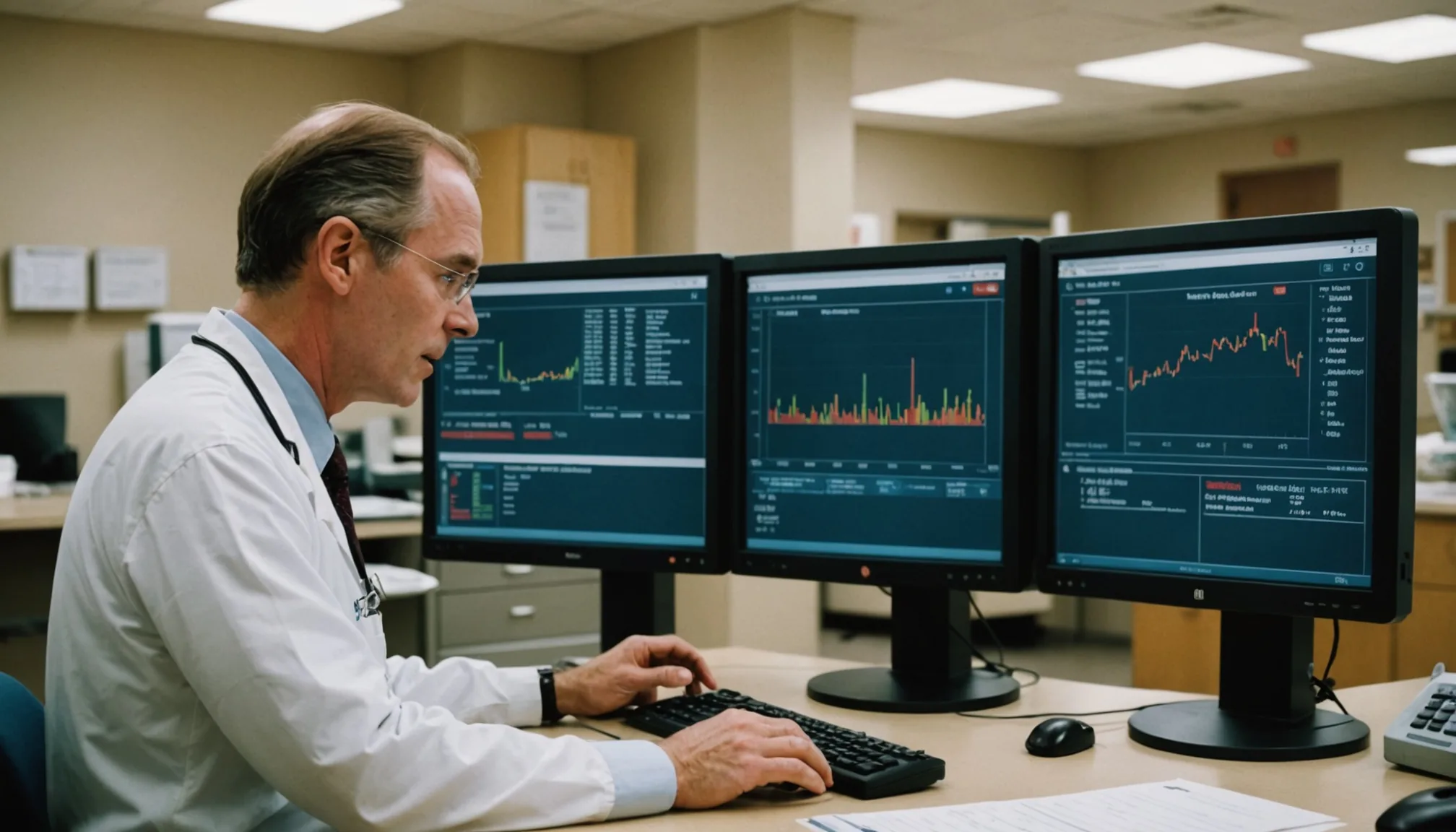



ED boarding — the period between when a patient is admitted from the emergency department and when they actually arrive in an inpatient bed — remains one of the most measurable throughput problems in regional hospital operations. Regional hospitals averaging 3.2 to 5.8 hours of boarding per admitted patient are not experiencing a bed-supply problem. They are experiencing a coordination problem.
That distinction matters because the two problems call for different interventions. Adding beds is expensive and slow. Improving the coordination of existing beds is faster, measurable, and achievable without new capital or additional staff.
Most regional hospitals have beds available during periods of high ED boarding. The issue is not that beds do not exist — it is that the house supervisor does not have a reliable, real-time picture of which beds are available, which are likely to become available in the next two hours, and which patients waiting in the ED are best matched to each opening.
The data exists in Epic and Cerner. But it is structured for documentation and billing workflows, not for the decision a supervisor makes every 20 minutes. Finding current bed status in most EHR dashboards requires four to six navigation clicks. Predicting which patient will discharge within the next two hours requires cross-referencing physician notes, pharmacy reconciliation status, and transport availability — none of which surface in a single view.
The result is that charge nurses and house supervisors fall back on printed census sheets updated by fax, phone calls to unit clerks, and institutional memory of which attending tends to discharge early. These informal systems work until volume spikes, at which point they fail visibly and expensively. Every one-hour boarding delay costs an estimated $1,200 to $1,800 in downstream bed throughput, as beds remain occupied by ED patients while new admissions wait.
Several operational approaches have shown consistent results at regional hospitals, independent of technology implementation:
Technology is most useful when it replaces the manual data-gathering steps that slow supervisor decisions. A house supervisor spending 8 to 12 minutes per bed-assignment decision gathering data from separate EHR views, phone calls, and a whiteboard is not making a slow decision — they are making a decision with incomplete information on a slow timeline. The right tool surfaces the relevant data in the same workflow the supervisor is already using.
Epic Hyperspace sidebar gadgets, for example, allow a prediction dashboard to appear inside the existing workflow without requiring supervisors to open a separate application. That matters in practice: tools that require a context switch see substantially lower adoption rates in operational settings than tools embedded in existing workflows.
What technology cannot do is substitute for operational accountability. Predictive tools surface information; they do not make decisions. Regional hospitals that see durable boarding reductions combine automated data surfacing with clear role assignments for who acts on what information and by what deadline.
Boarding reduction programs that work track three metrics consistently: median boarding time per admitted patient (from admission order to ED departure), bed assignment-to-clean time (from bed assignment to environmental services completion), and first-case OR on-time start rate. These three numbers together give a complete picture of throughput performance. Improving one while ignoring the others typically produces a problem shift rather than a genuine throughput gain.
Regional hospitals operating at 200 to 500 beds have enough volume to see statistically meaningful changes within a 60- to 90-day measurement window. That timeline is short enough to validate whether an operational or technology intervention is working before the improvement degrades back to baseline, which is the more common failure mode: good results in the pilot period, followed by reversion to the prior workflow when the initiative loses active sponsorship.
Durable boarding reduction requires ongoing data visibility, not a one-time intervention. The supervisors who manage throughput every day need access to the same information on Tuesday at 3 a.m. that they had on the first day of the improvement project.